What is Activated Carbon? A Refined Guide by CAC
WHAT IS ACTIVATED CARBON
Activated carbon is a highly engineered form of carbon with an exceptionally porous internal structure that gives it a very high specific surface area and extensive pore volume. These features enable it to adsorb (i.e., attract and hold) molecules of contaminants from liquids, gases or chemical streams. Because of that, it is widely used in purification and filtration across water, air, food, pharmaceuticals and industrial applications.
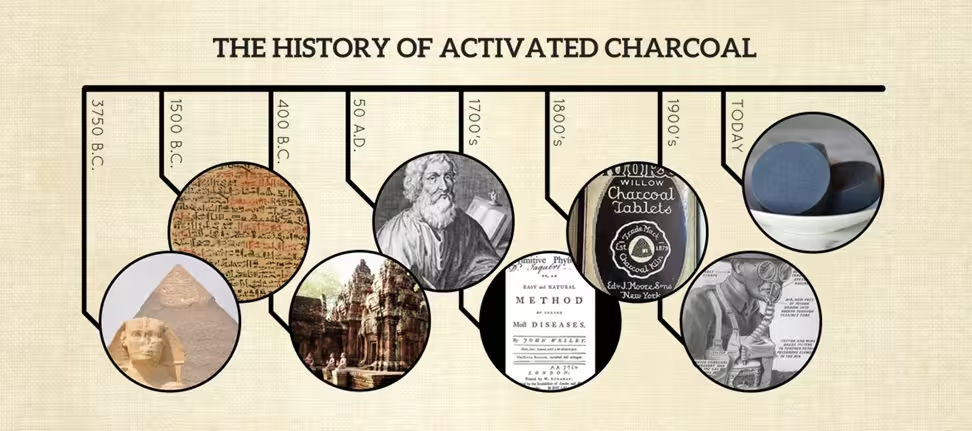
HISTORICAL BACKGROUND
Activated carbon has been used for thousands of years. Ancient Egyptians used charcoal to purify water and treat poisoning. Over time, scientists developed modern activation methods to enhance its adsorption capabilities, making it a crucial material for industries and healthcare. While people have long used charred carbon materials for rudimentary filtration or medicinal purposes, the modern concept of activated carbon meaning carbon deliberately treated to open up a network of micropores with adsorption-enhanced performance emerged over the 19th and 20th centuries. In the late 1700s, studies showed that carbon could decolorize liquids, indicating adsorption capability. In 1881, the term 'adsorption' was applied to the uptake of gases by carbons. During the early 1900s, activated carbon began to be used in gas masks and for gas phase purification, establishing commercial activation methods and broader industrial use.
RAW MATERIALS
Activated carbon is manufactured from carbon-rich precursor materials. Typical feedstocks include:
-
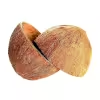
Coconut shells — dense, hard, high carbon content
-
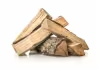
Wood — commonly used for air/water purification media
-
Coal — widely used for industrial grade media
- Peat or other biomass residues — used in more niche or sustainable production routes
HOW ACTIVATED CARBON IS MADE (DETAILED STEPS)

- Pre-treatment / De-moisturizing: The raw material is first dried to remove moisture to ensure efficient heating.
- Carbonization / De-volatilizing: The dried precursor is heated in a low-oxygen atmosphere (~400-600 °C) to remove volatile compounds and produce carbon 'char'.
- Activation (Physical or Chemical): The char is exposed to oxidizing agents (steam or CO₂) at high temperature (~800-1100 °C) or chemically treated with activating agents (H₃PO₄, KOH, ZnCl₂) to open pores.
- Surface Treatment & Washing: The material is cooled, washed to remove residues, and dried.
- Sizing, Screening, and Finishing: The carbon is milled and sized into powder, granules, or pellets, and optionally impregnated for special uses.
- Quality Testing & Packaging: The finished product is tested for surface area, porosity, and strength, then packaged.
KEY PROPERTIES
- Surface area: Up to ~3,000 m²/g
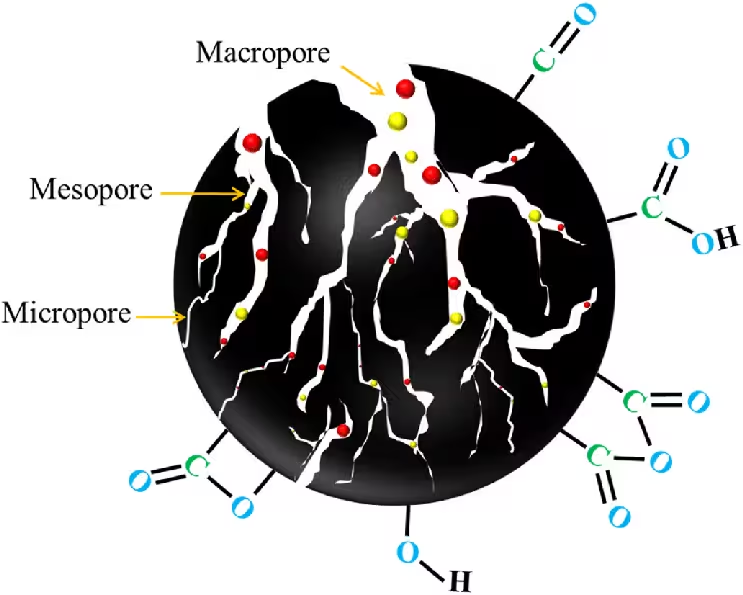
- Porosity: Micropores (<2 nm), mesopores (2–50 nm), macropores (>50 nm)
- Density/Hardness: Determines mass/volume ratios and strength of materials
- Adsorption: Physical, Chemical and Catalytic adsorption mechanisms
- Tailorable surface chemistry
TYPES AND THEIR USES
- Powdered Activated Carbon (PAC): Fine powder; used for rapid water purification, air-mask filters, odor/chemical removal.
- Granular Activated Carbon (GAC): Larger granules; used in home water filters, industrial wastewater, air/gas purification, aquariums/pools.
- Pelletized/Extruded Activated Carbon: Cylindrical pellets; used for gas purification, emission control, HVAC odor removal.
- Impregnated Activated Carbon: Chemically treated; used for toxic gas control, antibacterial water treatment, lab/medical filters.
- Catalytic Activated Carbon: Modified surface chemistry; used for chlorine/chloramine removal, H₂S treatment, ozone decomposition.
HOW ACTIVATED CARBON WORKS (ADSORPTION MECHANISMS)
Activated carbon removes contaminants by adsorption not simply filtering but binding molecules onto its vast internal surface. Physical adsorption relies on van der Waals forces, while chemical adsorption forms chemical bonds. Its microporous structure allows even tiny molecules (like chlorine, odors, and toxins) to be trapped effectively.
APPLICATIONS
- Water Purification: Removes chlorine, pesticides, herbicides, heavy metals, and organics from drinking water and wastewater.
- Air and Gas Purification: Captures odors, VOCs, and toxic gases; used in respirators, HVAC, and scrubbers.
- Medical and Healthcare Uses: Treats poisonings, used in wound dressings, gas masks, and respirators.
- Industrial Processing: Used for solvent recovery, gold purification, and emissions control.
- Food & Beverage Industry: Removes color, taste, and odor; improves purity and consistency.
ADVANTAGES & COST-TO-PERFORMANCE CONSIDERATIONS
- Very high adsorption capacity for a wide range of contaminants.
- Chemically stable and non-toxic.
- Versatile across industries (water, air, pharma, food, industrial).
- Renewable when sourced from coconut shells and biomass.
- Can be regenerated for multiple cycles.
- Cost-to-Performance: High-quality activated carbon, while more expensive initially, delivers better long-term cost effectiveness due to higher adsorption capacity and longer service life.
ENVIRONMENTAL IMPACT
Activated carbon production consumes energy, but sustainable feedstocks like coconut shells reduce environmental impact. Spent carbon can often be regenerated, extending its life and reducing waste.
CONCLUSION
Activated carbon is an engineered material with exceptional adsorption performance. Its high internal surface area, controlled pore structure, and tunable chemistry make it vital for water, air, industrial, and medical purification. Its long life and cost-to-performance advantages underscore its importance in environmental protection and sustainability.