Flue Gas Treatment
As environmental regulations tighten globally and sustainability becomes a business imperative, industrial facilities face mounting pressure to reduce emissions while maintaining operational efficiency. Activated carbon adsorption has emerged as a proven, cost-effective technology for simultaneous removal of multiple pollutants from flue gas streams offering industries a sustainable pathway to compliance and environmental stewardship.
MULTI-POLLUTANT EMISSIONS
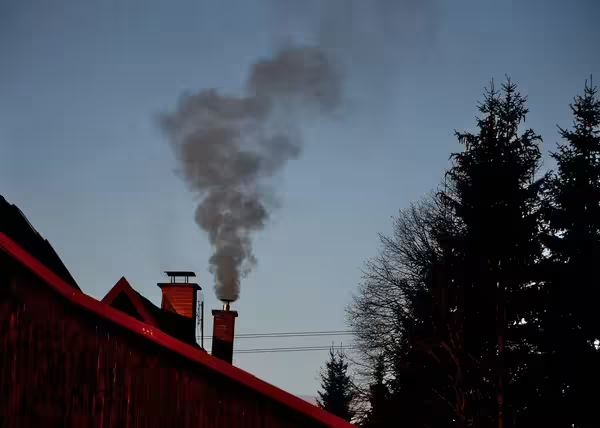
Industrial flue gases contain a complex mixture of harmful pollutants including mercury (Hg), sulfur oxides (SOx), nitrogen oxides (NOx), volatile organic compounds (VOCs), and dioxins/furans. Each poses distinct environmental and health risks, from mercury bioaccumulation in aquatic ecosystems to NOx & SOx contributions to acid rain and smog formation. Traditional single-pollutant control technologies require multiple treatment stages, increasing capital costs, operational complexity, and facility footprint.
THE ADSORPTION MECHANISM OF ACTIVATED CARBON:
Activated carbon's exceptional performance stems from its highly porous structure. With surface areas ranging from 800-1500 m²/g, a single gram of activated carbon contains an abundance of meso and micropores that create an enormous adsorption capacity.
Physical Adsorption: Van der Waals forces attract pollutant molecules to the carbon surface, particularly effective for VOCs and organic compounds.
Chemical Adsorption: Surface functional groups on specially impregnated carbons react with target pollutants. Such as halogenated carbons to oxidize elemental mercury to mercuric brom, or iodide, hydroxide treated carbons to enhance acid gas capture.
Catalytic Conversion: Some formulations catalyse the reduction of chlorine to chloride or ozone to oxygen.
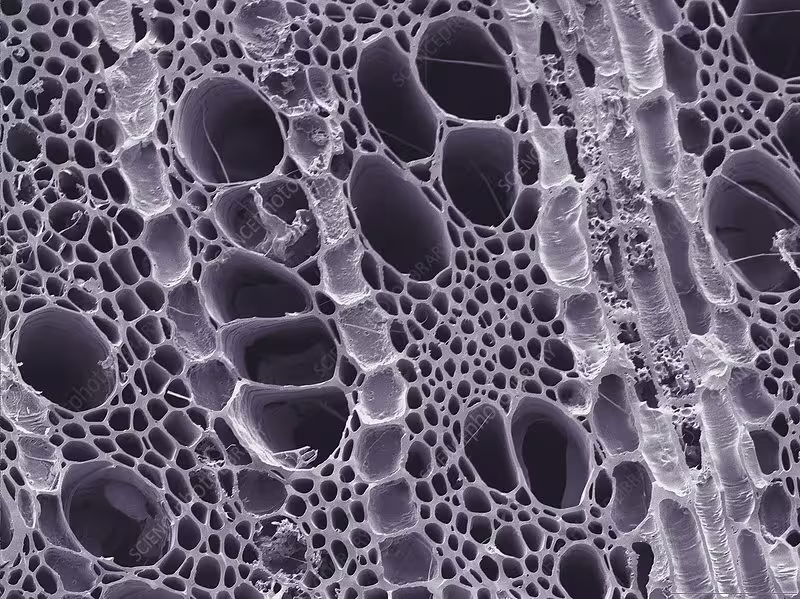
Microscopic image of activated carbon.
POLLUTANT REMOVAL:
Modern activated carbon injection (ACI) systems achieve impressive removal efficiencies: 90%+ mercury removal when combined with selective catalytic reduction, and 85-90% VOC capture. This multi-pollutant capability eliminates the need for separate treatment systems, dramatically reducing both capital expenditure and ongoing operational costs.
SUSTAINABILITY BENEFITS:
Beyond regulatory compliance, activated carbon offers compelling sustainability benefits. The technology requires no hazardous chemicals, operates at ambient temperatures (reducing energy consumption versus thermal oxidation), and spent carbon can often be regenerated or repurposed. Many activated carbons are manufactured from renewable biomass sources, supporting circular economy principles. The compact system footprint minimizes land use, while reliable performance reduces emissions variability and environmental impact.
CARBON ACTIVATED EUROPE: INNOVATION IN EMISSION CONTROL
At Carbon Activated Europe, we've developed specialized activated carbon formulations engineered specifically for flue gas applications. Our product portfolio includes:
- Our product portfolio
- COL-PL1000-18
READY TO OPTIMISE YOUR EMISSIONS CONTROL?
Contact Carbon Activated Europe today for a customised solution proposal.
Reference:
Bansal, R.C. and Goyal, M. (2005) Activated Carbon Adsorption.